Project 02 · Since 2026
Arcgate
Welding procedures, qualifications and audits for a fabrication shop
In production use
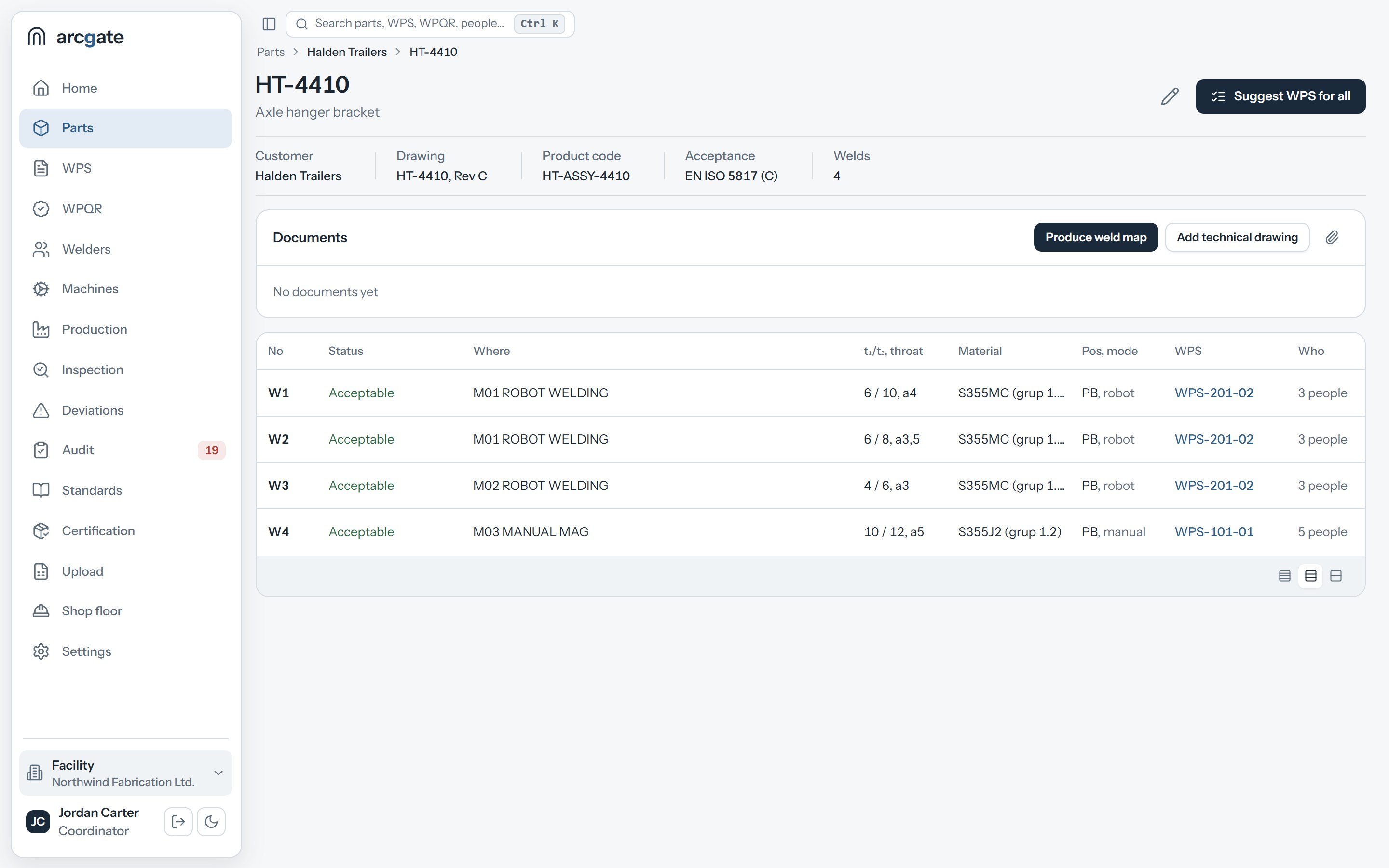
Arcgate keeps a welding shop's WPSs, WPQRs, welder certificates and machine validations in one place, checks each weld on a drawing against them, and produces the documents an EN ISO 3834 audit asks for.
How it works
- 01
A weld on the drawing
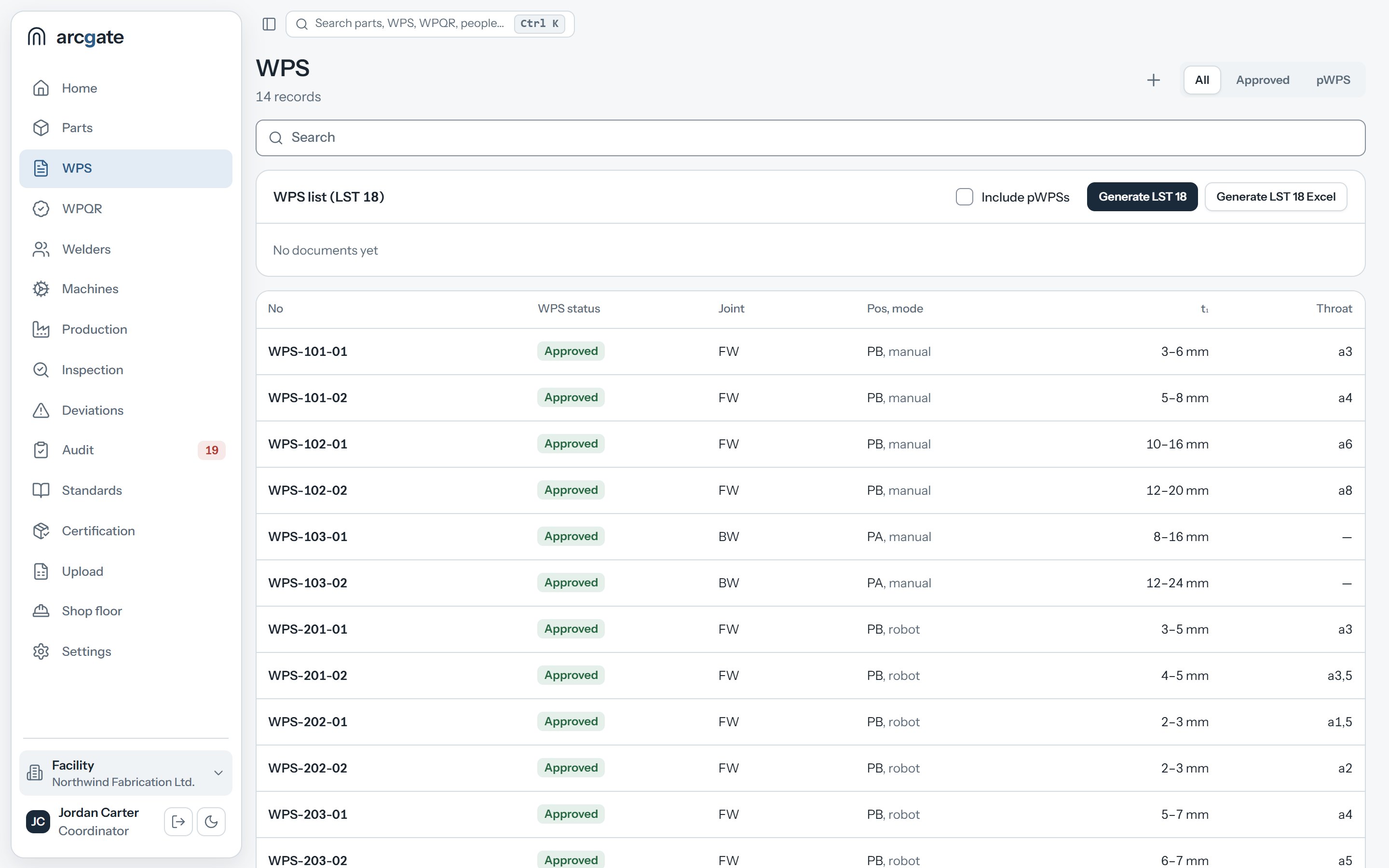
Every weld on a customer drawing is entered once: joint, materials, thicknesses, throat, position and process.
- 02
Read against the standard
Each WPS carries the range its WPQR qualifies, computed from the clauses of EN ISO 15614-1. Arcgate tests the weld against every range and names the one that fails.
- 03
The people who can weld it
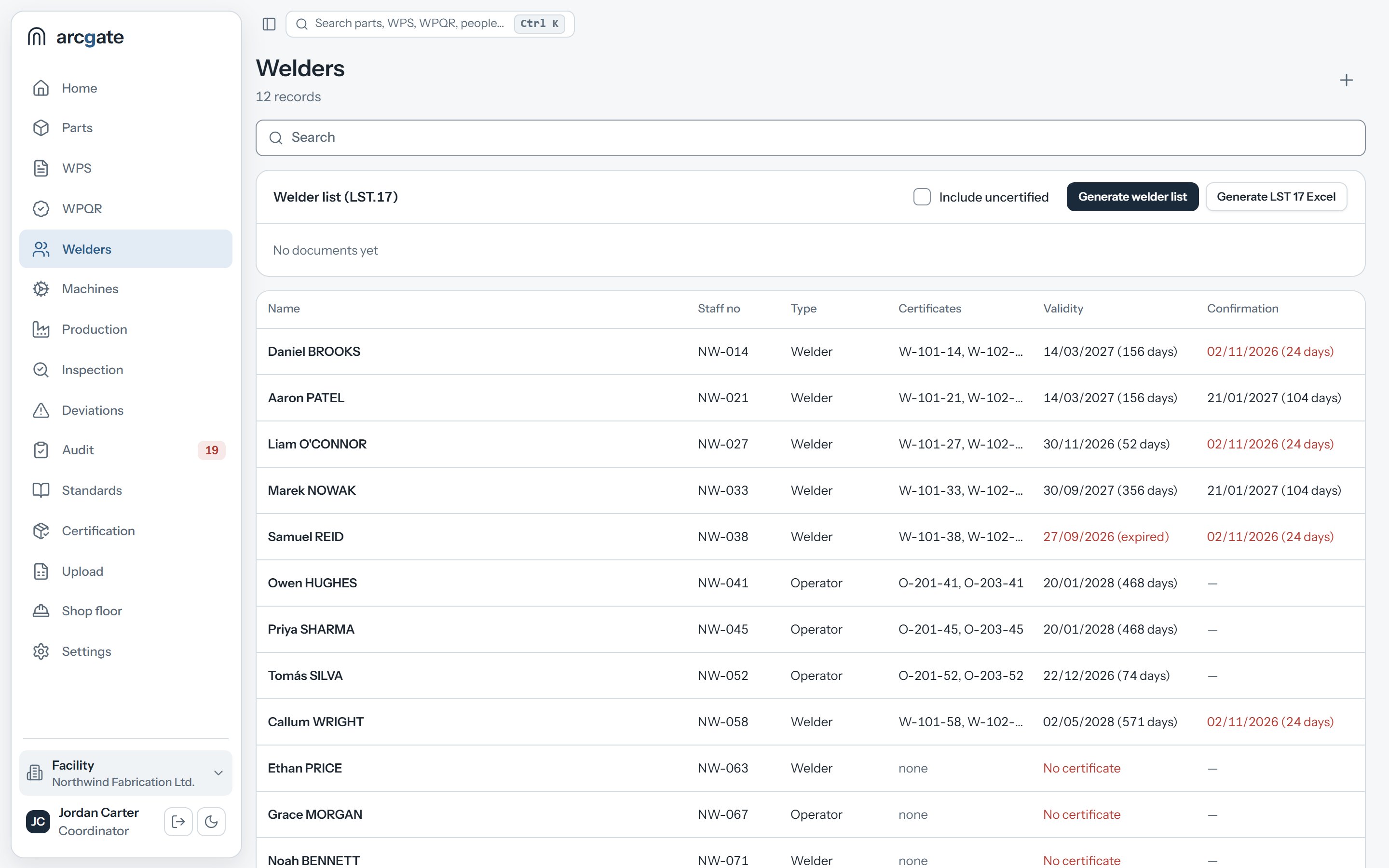
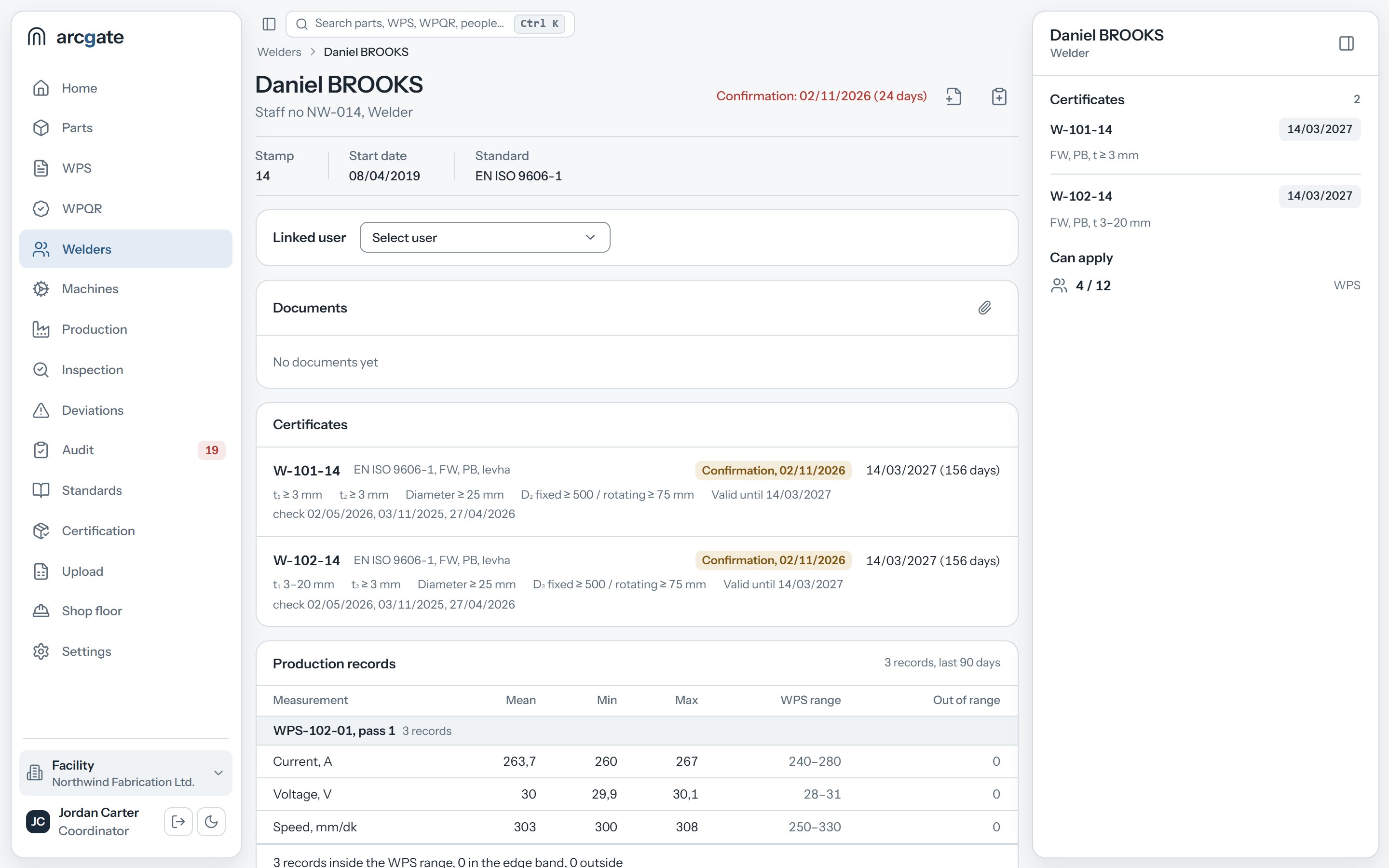
From the WPS that covers the weld it finds the operators whose certificates cover it too, and shows when each certificate runs out.
- 04
Ready for the audit
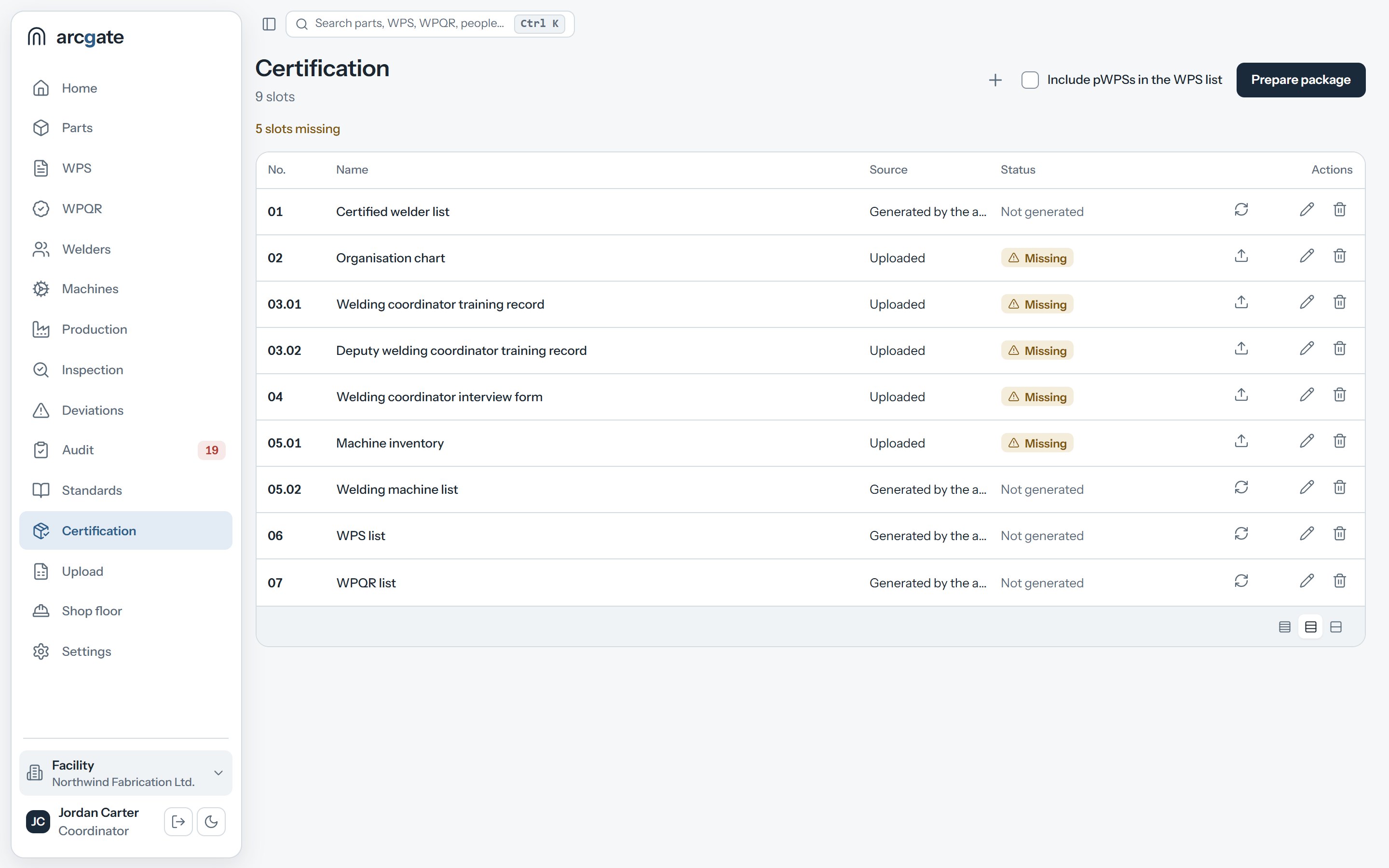
The same records produce the controlled lists an EN ISO 3834 audit asks for, as PDF and Excel, with reminders before anything lapses.
Standards it reads
- EN ISO 15614-1
- EN ISO 15614-11
- ISO/TR 15608
- EN ISO 9606-1
- EN ISO 14732
- EN IEC 60974-14
- EN ISO 3834
Joint sketch editor
A sketch that follows the numbers
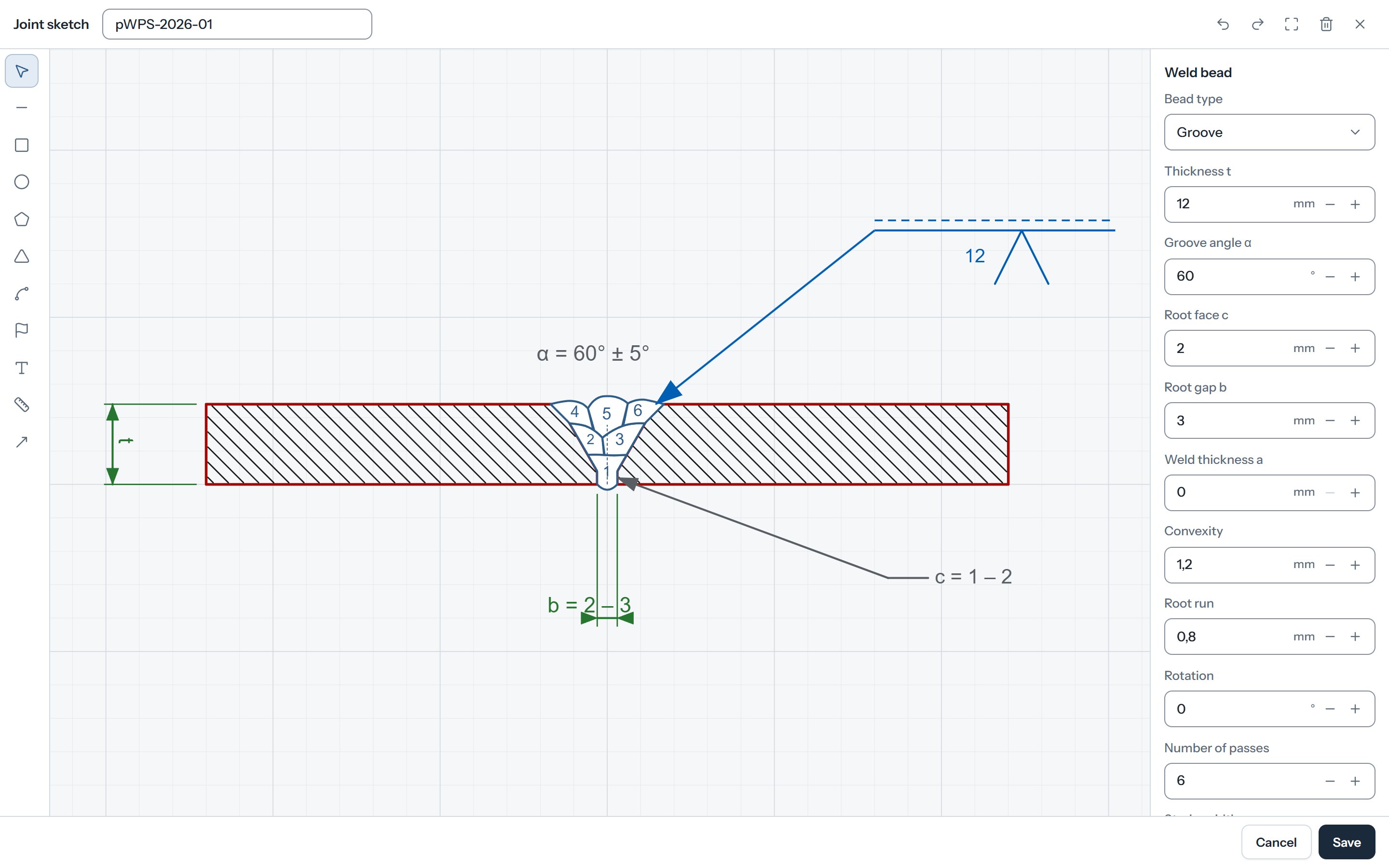
Templates for butt, fillet, pipe, flange and laser joints. Change the angle, the gap or the number of passes and the drawing redraws itself.
- 01 Weld preparation Single V at 60°, 2 mm root face and 3 mm gap on 12 mm plate, drawn from those numbers
- 02 Passes Laid in welding order and numbered as the welder runs them
- 03 Dimensions and symbol Gap, root face and the ISO 2553 weld symbol, printed on the WPS as vector
Why
A welding shop that works to EN ISO 3834 keeps its procedures, qualification records, welder certificates and machine validations in spreadsheets and paper folders. The rules that connect them are in the standards: which WPQR supports which WPS, which thickness range a test piece qualifies, when a certificate needs its six-monthly confirmation. Arcgate keeps those records in one place and applies the rules to them.
What it does
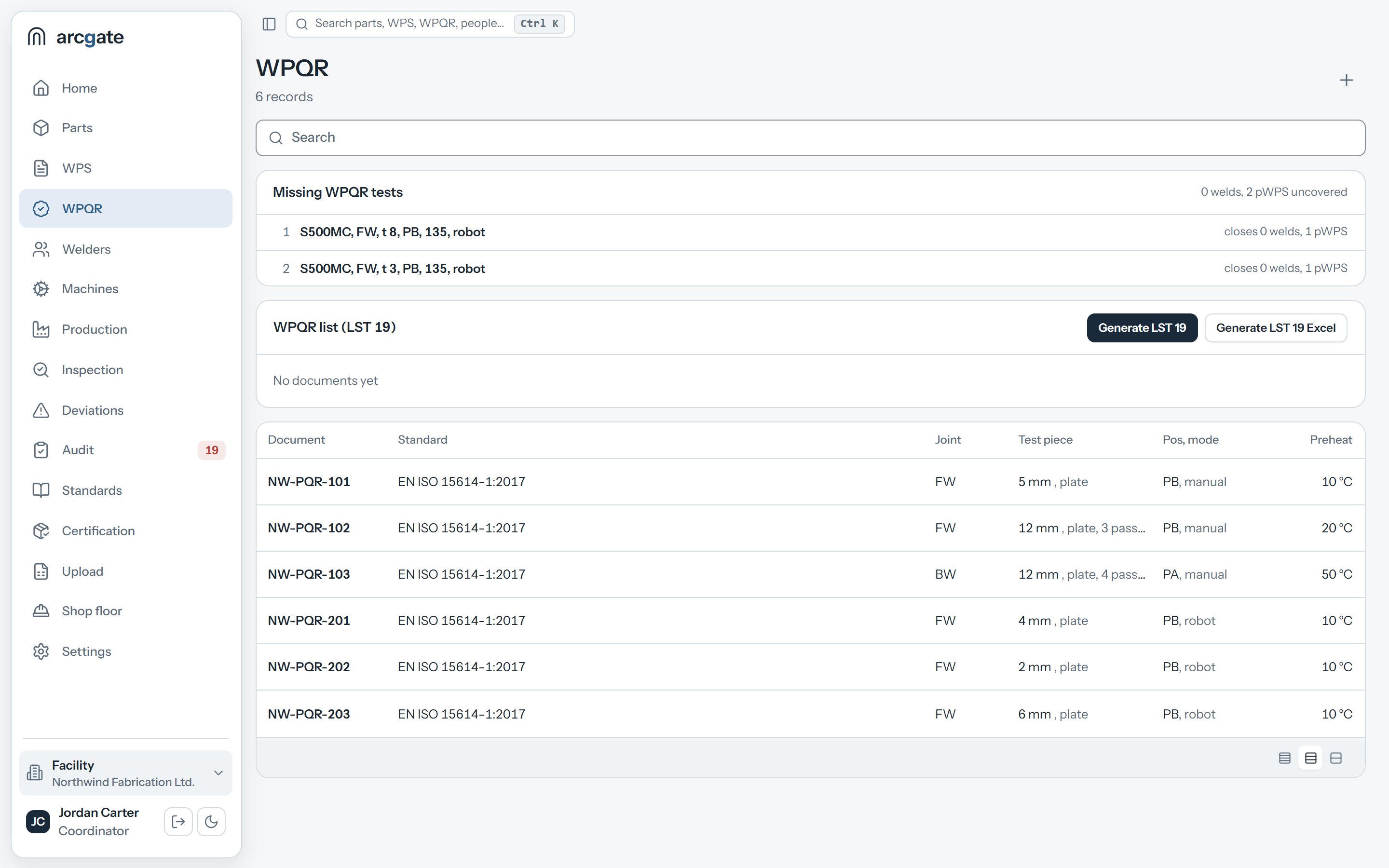
Ranges from the standard. The range a WPQR qualifies comes from the clauses of EN ISO 15614-1, EN ISO 15614-11 and ISO/TR 15608, stored as data and not typed by hand.
Coverage check. For a weld on a drawing (joint, thickness, material, position, process) Arcgate lists the WPSs that cover it and the welders qualified to apply them.
Welder qualifications. EN ISO 9606-1 and EN ISO 14732 certificates with validity and confirmation dates, and reminders before they lapse.
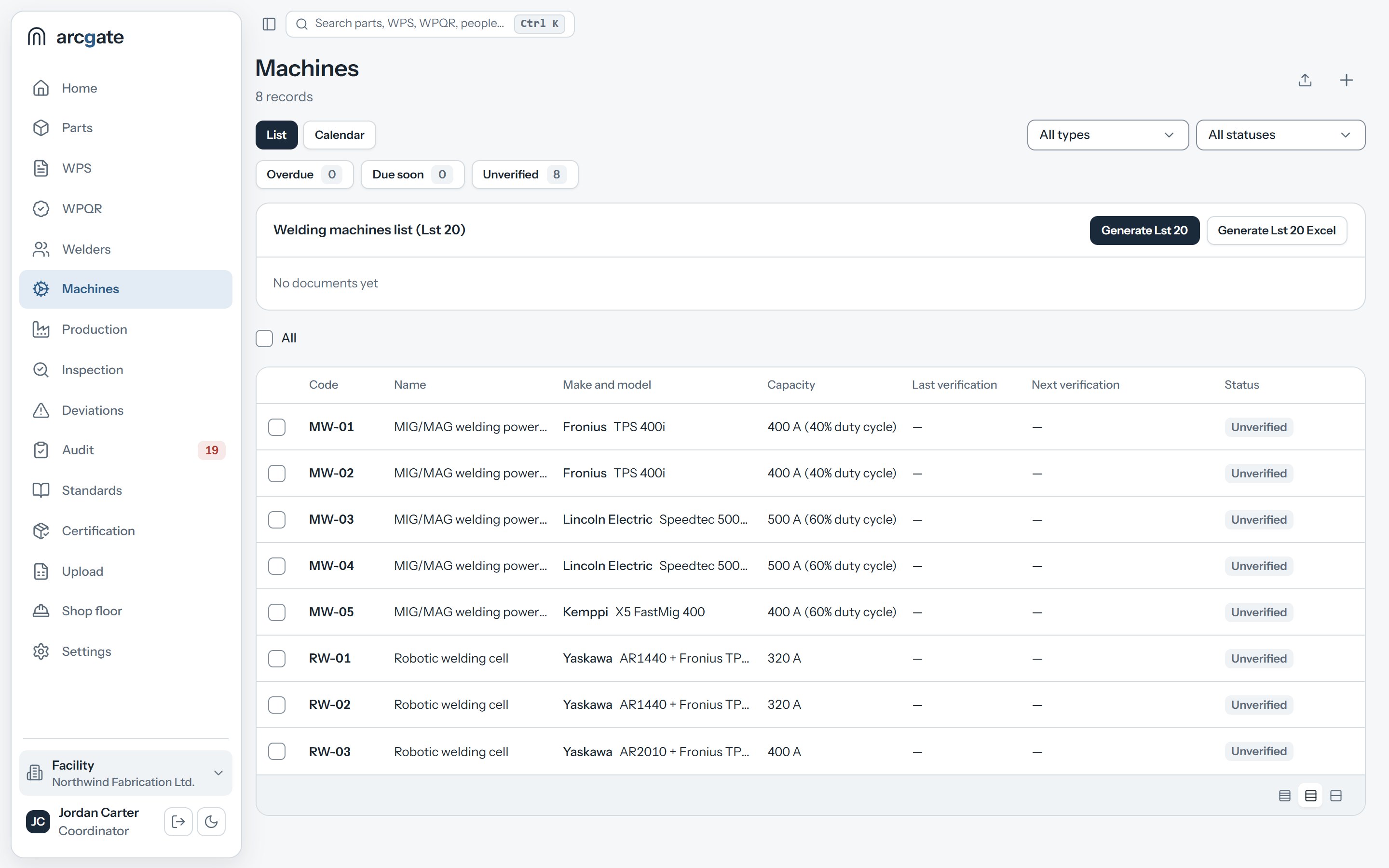
Machine validation. Measured validation to EN IEC 60974-14 on numbered forms.
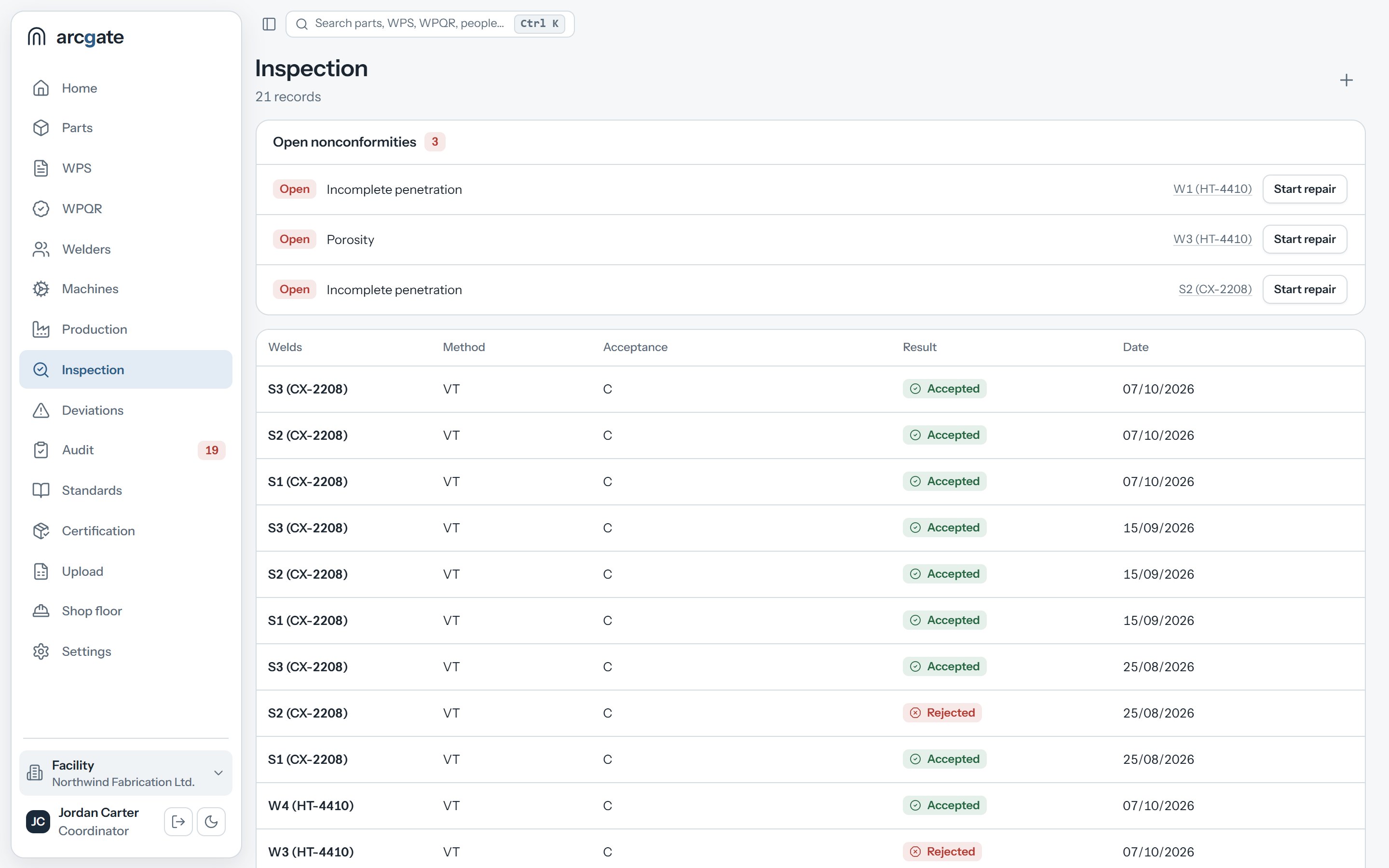
Audit. A rule set finds WPSs that no welder can apply, certificates that expire and documents that are missing. The controlled lists of WPSs, WPQRs, welders and machines come out as PDF and Excel.
Drawings. A joint sketch editor for WPS documents, and weld maps on the customer's technical drawings.
How it is built
A FastAPI service on PostgreSQL, a rules engine that reads the clauses of each standard from YAML, and a React and TypeScript interface in Turkish and English. It runs as a Docker Compose stack on the shop's own server. An MCP server lets an AI assistant read and update the records through the same API.
The screens show a fictional company, Northwind Fabrication Ltd., with generated data.
Screens
Captured from a demo installation: a fictional company, Northwind Fabrication Ltd., with generated data